Crypto Casino Scams: How to Spot a Fake Site Before It Takes Your Deposit
Real cases, not theory: the MrBeast fake-casino wave, paid listicles pushing unlicensed sites, and the licence checks that separate legit crypto casinos from traps.
 By Brandon Scotch, founder of OhCryptoBullmarket, trading crypto since 2016
The screenshot looked flawless. A tweet from MrBeast, blue check and all, promising $2,500 in free casino credits to anyone who typed in a promo code. I have been in crypto since 2016 and I still had to look twice. The tweet never existed. It was one of more than a thousand fakes feeding a single scam network, and Canadians are wiring real money into it every week. So let me answer the question people keep typing into ChatGPT and Google: are any of these sites real, and how do you tell?
Are any crypto casinos legit?
Yes, some are. A small set of crypto casinos hold verifiable licences, publish real terms, and carry complaint histories stretching back a decade; 7Bit and BitStarz, both running since 2014, are examples. The problem is they share the internet with over 1,200 documented fake casino domains and paid listicles that verify nothing.
The word "legit" hides two questions. Will the site pay you at all, because plenty will not. And does anyone stand behind it when things go wrong, where the honest answer for offshore casinos is: only a real regulator's licence plus the site's fear of watchdog complaints. No crypto casino is licensed by a Canadian province; AGCO standards for Ontario's regulated market bar cryptocurrency outright. Everything in this post lives in the grey market, so your screening has to do the work a regulator otherwise would.
How does the MrBeast crypto casino scam actually work?
Scammers post faked celebrity endorsements, usually MrBeast, promising $2,500 in free casino credits. The site shows you fake winnings, then demands a $100 crypto "verification deposit" before you can withdraw. Krebs on Security traced more than 1,200 such domains to one shared backend. Every deposit vanishes.
Security journalist Brian Krebs documented the mechanics in Scammers Unleash Flood of Slick Online Gaming Sites, after a 17-year-old Discord developer known as Thereallo noticed identical code across supposedly unrelated casinos. What came out was industrial: threat-intel firm Silent Push counted over 1,270 active domains sharing one API key, one chatbot, one support team, and a unique Bitcoin wallet per domain. The games are polished. The balance climbs. Then the cashier asks for a small deposit "to verify your wallet," and that is the last interaction that ever goes your way.
The distribution channel is the nasty part. Hacked Discord accounts blast the promo codes to their friends lists, so the pitch arrives from someone you trust, and threads on Reddit's r/Scams fill weekly with people comparing the same casino under twenty different names. The celebrity layer keeps evolving too. CBC News reported the case of a Guelph, Ontario woman who lost $14,000 after a deepfake MrBeast ad led to a phone call with a man she believed was the YouTuber himself, a $250 entry fee, then $5,000 into a wallet address he supplied. Different wrapper, same engine: manufactured trust, then a deposit that only flows one way.
Here is the pattern grid I keep in my head when a new casino crosses my feed.
| Scam pattern | How it looks | Documented example | The tell |
|---|---|---|---|
| Fake celebrity casino | Faked tweet, $2,500 free credits, promo code | 1,270+ domains on one backend (Krebs, 2025) | ~$100 deposit demanded to "unlock" withdrawals |
| Discord takeover | A friend's account DMs you a casino code | Hijacked accounts spreading MrBeast codes; r/Scams threads | Unsolicited message, urgency, unknown site |
| Deepfake investment call | Video ad, then a call from the "celebrity" | Guelph victim, $14,000 (CBC News) | Celebrities do not phone fans about wallets |
| Listicle laundering | "Best overall" rankings with invented stats | LuckyRollers on paid marketing pages | Cited ratings do not exist on the platforms named |
| Paper-registration casino | Company number presented as a licence | Cryptorino, Betpanda | Costa Rica issues no gaming licence at all |
| Mirror domains | Look-alikes wearing a real brand's name | JackpotCity's swarm of unofficial .ca clones | Domain does not match the official URL |
Why do "best crypto casino" listicles keep recommending unverifiable sites?
Because many are paid placements, not reviews. LuckyRollers is the clean example: marketing pages call it "best overall" and cite a 4.6/5 casino.guru rating, yet no casino.guru page for it exists at all. Its Trustpilot shows 2.2 of 5 from about 8 reviews, mostly withdrawal complaints.
I went looking for LuckyRollers the way I research any casino, and hit a wall on every side. The site serves an unreadable JavaScript shell to independent checkers, with no fetchable terms page, and no licence, operator company or founding date verifiable anywhere. The glowing numbers circulating online, a "CasinoGuru 4.6/5 from 412 reviews, 96% resolved", trace back to the casino's own New Zealand marketing pages and do not even match casino.guru's rating format. Meanwhile the one independent signal that exists, its Trustpilot profile, reads 2.2 of 5 across roughly 8 reviews dominated by one-star withdrawal reports. Even its bonus claims disagree with each other: 30,000 USDT on one marketing page, $3,000 on another.
That is listicle laundering: a site with zero verifiable facts ranked above casinos with twelve-year records because the ranking is bought. It is why we publish our method at how we review, and why our roundup of what Reddit actually says about crypto casinos in Canada exists; forum posts are harder to buy than listicle slots. Any page claiming to rank the best crypto casino should show where every number came from. If it cannot, treat the ranking as an ad.
What does a real gambling licence look like, and how do you check one?
A real licence names a gaming authority, an operating company, and a licence number you can match against the casino's own terms. A corporate registration is not a licence: Cryptorino and Betpanda both present Costa Rica paper (Star Bright Media S.R.L.) as legitimacy, but Costa Rica issues no gaming licence whatsoever.
The Costa Rica pattern deserves its own paragraph because it is spreading. Both Cryptorino and Betpanda operate under the same Costa Rica company registration, and Costa Rica famously has no gaming authority: registering a company there is legal paperwork, not oversight. Casino.guru rates both in its Low band (snapshots between 4.4 and 5.4) and advises players to stay away, citing blocked accounts after wins at Cryptorino and payout delays plus zero responsible-gambling tools at Betpanda. Neither publishes a wagering figure you can trust; three different reviews of Cryptorino report 40x, 60x and 66x for the same bonus.
Contrast that with what a checkable casino looks like, then run this table on anything new.
| Check | Where to look | What a pass looks like |
|---|---|---|
| Licence number published | Footer and terms page | 7Bit: Curacao OGL/2024/1307/0748; BitStarz: OGL/2024/165/0185 |
| Operating company named | Terms, section 1 | Scores55 Tech B.V. (7Bit); Gareton B.V. (BitStarz), with addresses |
| Watchdog file exists | casino.guru index and complaints | 7Bit holds a 9.1 "Very High" index; BitStarz 9.8, multi-year archives |
| Review volume with history | Trustpilot, AskGamblers | Thousands of reviews over years (7Bit ~2,200; BitStarz ~5,000), not 8 |
| Terms readable by anyone | Fetch the T&Cs logged out | Restricted countries, withdrawal caps, bonus rules in plain text |
| Small-withdrawal test | Your own first session | Minimum deposit, small withdrawal, TXID lands in your wallet |
One honesty note: a Curacao licence is a floor, not a halo. Even licensed sites have quirks worth reading for, and 7Bit has one: its terms block NYX-branded games for Canadian accounts specifically, so part of the lobby you see in reviews will not load for you. Our review documents details like that; a multi-year complaint file lets you weigh them before a five-figure win, not after.
Which red flags mean walk away, and which green flags actually count?
Walk away from any casino with no fetchable terms, a corporate registration posing as a licence, ratings that cannot be found on the platforms cited, or a pattern of confiscated winnings. Trust builds from published licence numbers, decade-long complaint files, high watchdog safety scores, and a clean small-withdrawal test you run yourself.
Confiscation is the red flag people underweight. Vave, a Curacao-licensed casino that markets to Canadians, has documented 2025-2026 confiscation cases on watchdog sites under unspecified "suspicious activity" findings, a T&C set casino.guru flagged as unfair, an undisclosed licence number, and a Trustpilot sunk to 1.7-2.0 across roughly 190 reviews. Licensed, yet the file screams caution. Mirror domains are the other quiet trap: JackpotCity, a real brand since 1998, is surrounded by look-alike affiliate domains wearing its name, so even a legitimate reputation can be borrowed by a page showing you the wrong terms.
| Red flag | Green flag |
|---|---|
| Terms unreadable to logged-out visitors | Full T&Cs fetchable by anyone |
| "Registration" offered as proof of licensing | Named regulator, licence number matching the terms |
| Ratings cited from platforms where no page exists | casino.guru file with years of resolved complaints |
| Trustpilot under 10 reviews, or profiles removed for fakes | Thousands of reviews, operator replying publicly |
| Deposit required before withdrawals "unlock" | Small test withdrawal pays out with a visible TXID |
| Domain almost matches a famous brand | Domain matches the licence holder's published URL |
| Confiscations under vague "suspicious activity" | Disputes documented and mostly resolved on watchdogs |
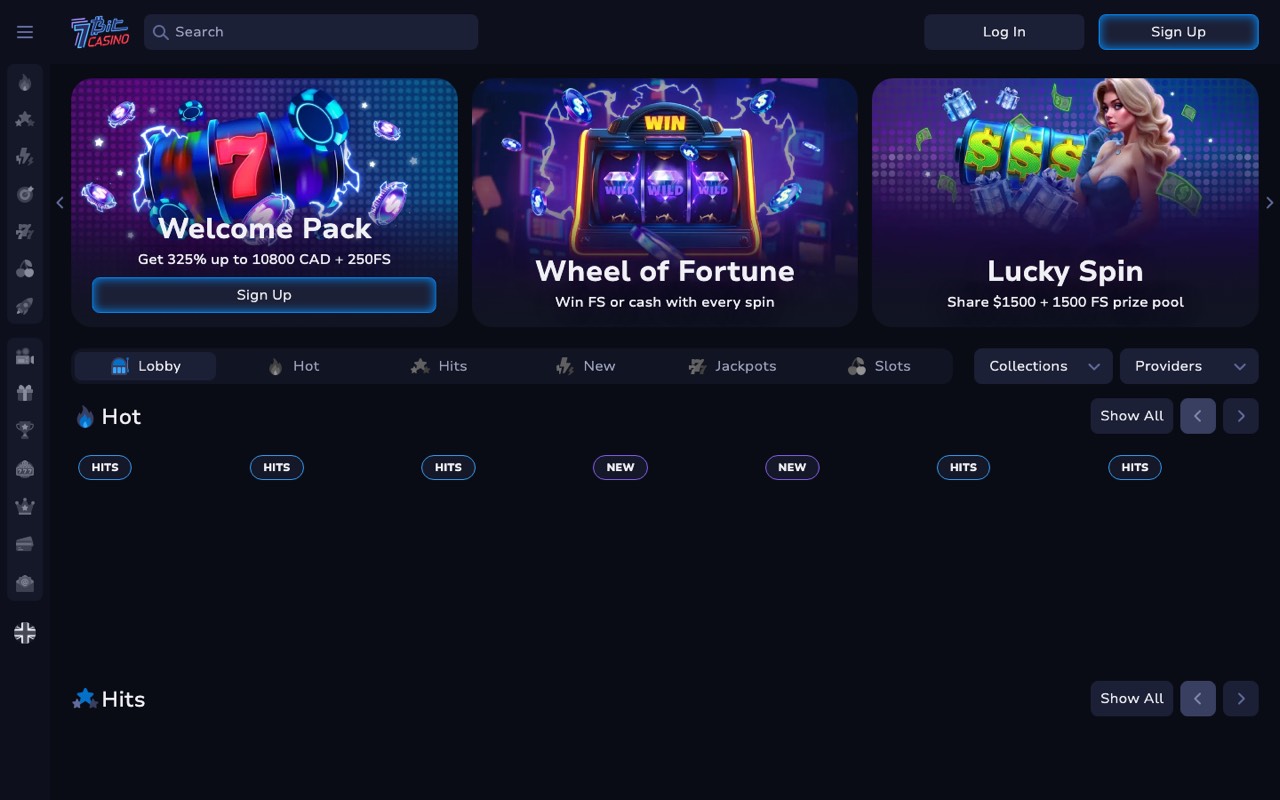
My own screening ends with a test no scam site can pass: deposit the minimum, play a little, withdraw something small, and watch for the TXID. A fake casino cannot fake an on-chain transaction to your wallet. If you would rather start from the boring, checkable option than from a stranger's Discord link, 7Bit Casino has operated since 2014 under a published Curacao licence, and our 7Bit Casino review walks through its complaint file, bonus traps and payout record before you deposit anything.
Two last things, because they matter more than any table. Offshore crypto casinos sit outside every provincial protection scheme in Canada, no AGCO, no self-exclusion registry, so a failed dispute ends at a watchdog complaint. Legal age is 19+ in most of Canada, 18+ in Alberta, Manitoba and Quebec. If gambling is pulling at you rather than the other way around, start with our responsible gambling page before anything else on this site.
Does MrBeast own or endorse a crypto casino?
No. The casinos using his name are fakes; security reporting traced more than 1,200 of them to one scam backend, and MrBeast has publicly called the deepfake ads using his likeness a serious problem. Any casino pitch built on a celebrity endorsement deserves the same assumption: fabricated until proven otherwise.
Are crypto casinos legal in Canada?
No Criminal Code provision targets you as a player, so Canadians are not prosecuted for playing offshore. The operators, however, are unlicensed in Canada: no crypto casino is registered in Ontario's or Alberta's regulated markets, and AGCO standards bar cryptocurrency outright. You play without provincial protection. Details in our Canadian legality guide.
I already deposited on a site I now think is fake. What can I do?
Stop paying immediately; every "release fee" or "verification deposit" is part of the script. Save screenshots, wallet addresses and TXIDs, report the fraud to your local police and the Canadian Anti-Fraud Centre, and warn the community on r/Scams so the domain gets documented.
What is the fastest single check before depositing anywhere?
Search the casino's name on casino.guru. A real casino with any history has a safety index and a complaint file there; a scam site either has nothing or has marketing pages inventing a rating that does not exist, which is itself the answer. Then confirm the licence number in the casino's own terms matches what the review shows.